
Article
Nigerian Food Guide: A Warm Beginner's Introduction
A friendly Nigerian food guide for beginners: the staples, iconic dishes like jollof and egusi, core flavors, drinks, and how to start cooking at home.
7 min readby The RecipeCrave Kitchen Team
If you have only ever met Nigerian food through a plate of jollof rice at a friend's party, you have tasted the doorway and not yet walked through the house. Nigerian cooking is big, generous, and deeply regional, built on a handful of humble staples and a flavor base that hits smoky, savory, and fiery notes all at once. It rewards curiosity, and it rewards patience.
This guide is for the honest beginner. We will walk through the staples that fill the plate, the iconic dishes worth knowing by name, the core flavors that make everything taste unmistakably Nigerian, the drinks that cool it all down, and a simple plan for cooking your first pot at home. No gatekeeping, no shortcuts that miss the point, just a warm map of where to start.
Start With the Staples
Most Nigerian meals are built around a starchy base and something rich to eat it with. The base does a lot of the work, and learning these five will carry you a long way.
- Rice is the celebration grain, cooked into jollof, served plain with stew, or fried with vegetables and spices for parties.
- Yam is a large, starchy tuber (not the orange American sweet potato). It is boiled, fried, pounded into a smooth mash, or roasted, and it turns up at breakfast and dinner alike.
- Plantain is the sweet-savory cousin of the banana. Fried ripe until caramelized, it becomes dodo; unripe, it is boiled or grilled and treated more like a vegetable.
- Beans, usually brown or black-eyed varieties, are stewed with palm oil and pepper, or ground and steamed into savory cakes.
- Cassava is a versatile root processed into many forms, most famously garri and the swallow known as eba, eaten with soups.
These starches often show up as "swallow," soft dough-like sides you pinch off, roll, and dip into soup rather than chew. Eba, pounded yam, and fufu all belong to this family, and each pairs with the soups below. If the idea of swallow feels unfamiliar, start with rice and plantain, which need no special technique, then work your way toward the doughs once the soups have won you over.
The Iconic Dishes to Know
A few dishes have become shorthand for Nigerian cooking, both at home and across the diaspora. Get familiar with these and you will recognize the heart of the cuisine.
- Jollof rice is the famous one: rice simmered in a blended base of tomato, pepper, and onion until every grain is stained red and packed with flavor. A slightly charred, smoky pot is prized.
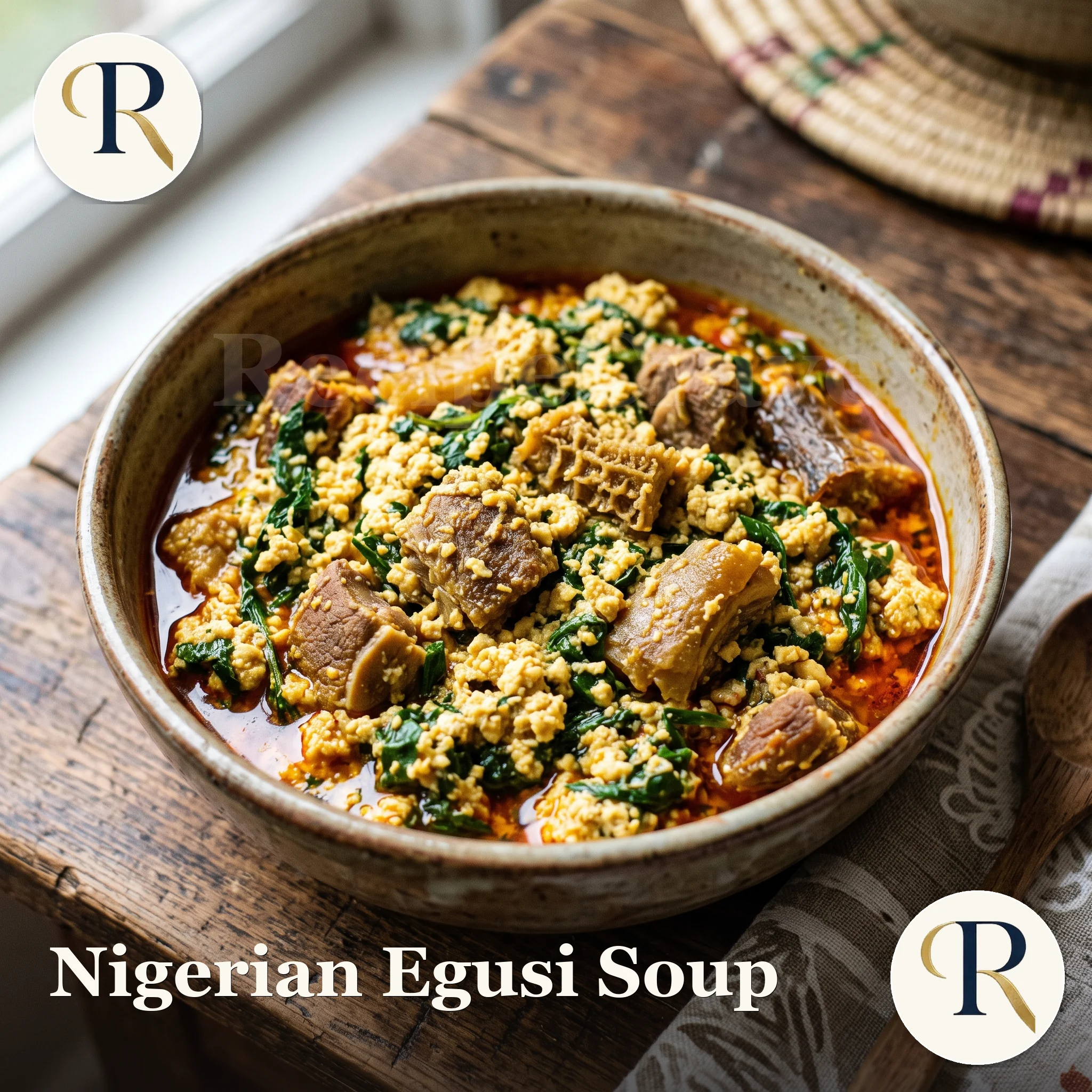
- Egusi soup is a thick, hearty soup thickened with ground melon seeds, cooked with leafy greens, palm oil, and usually meat or fish. It is a classic partner for swallow.
- Suya is spiced grilled skewers, typically thin beef coated in yaji, a peanut-and-spice rub, then grilled over open coals. It is Nigeria's beloved street-food snack.
- Moin moin is a steamed savory pudding of blended peeled beans, peppers, and seasonings, soft and satisfying, often served alongside rice or on its own.
- Pepper soup is a light, aromatic broth built on warming spices and plenty of heat, made with fish, goat, or chicken. It is comfort food and remedy in one bowl.
These are starting points, not the whole story. Every one of them has countless home versions, and half the fun is tasting how one cook's egusi differs from the next.
The Flavor Base That Ties It Together
What makes Nigerian food taste the way it does is a small set of foundational ingredients used again and again. Once you understand these, the dishes stop feeling mysterious.
- Palm oil is a thick, unrefined red oil with an earthy richness. It gives many soups and stews their deep color and distinctive taste, and it is different from the clear vegetable oil used for frying.
- Scotch bonnet peppers bring the signature fruity heat. They are blended into the pepper-and-tomato base that underpins countless dishes, and you can always use less to start.
- Crayfish, usually sold dried and ground, adds a savory, briny depth. A spoonful stirred into soup is a quiet backbone of flavor.
- Locust bean (known as iru or dawadawa) is a fermented seasoning with a pungent, funky, umami-rich character that lifts traditional soups.
Beginner tip: build your pepper base once and reuse it. Blend tomatoes, red bell pepper, onion, and scotch bonnet, then reduce it in oil until it darkens and thickens. That single base is the launchpad for jollof, stews, and more, so make extra and freeze it.
Season generously and taste as you go. Nigerian cooking is confident with salt, heat, and aromatics, and the balance comes from adjusting the pot in front of you rather than following a recipe to the letter. A cube or two of bouillon, a handful of ground crayfish, and a patient hand with the palm oil will get you closer than any exact measurement. Trust your nose, and let the pot tell you when it is ready.
Don't Forget the Drinks
The food runs warm and spicy, so the drinks are built to refresh. Two are worth knowing right away.
- Zobo is a deep-red drink brewed from dried hibiscus petals, tart and floral, often sweetened and infused with ginger, pineapple, or cloves. Served chilled, it is bright and thirst-quenching.
- Kunu is a lightly spiced grain-based drink, mildly sweet and smooth, popular as a cooling everyday beverage.
Palm wine and locally brewed options exist too, but for a beginner, a cold glass of homemade zobo is the easiest and most rewarding place to begin. Brew a big batch, sweeten it to taste, and keep it in the fridge; it disappears fast on a hot day and makes any spicy meal feel complete.
How to Start Cooking It at Home
You do not need a specialty store to begin, though one helps. Start with a dish that teaches the fundamentals and build from there.
- Master the pepper base first. It is the spine of so many dishes that learning it once pays off everywhere.
- Cook jollof rice as your first full meal. It uses that base, teaches you about heat and reduction, and it is genuinely satisfying to nail.
- Add one soup, like egusi, once you are comfortable. This introduces palm oil, ground crayfish, and the rhythm of layering ingredients.
- Try a drink like zobo on a quiet afternoon. It is forgiving, aromatic, and a nice break from the stove.
Source your staples at an African or international grocery for palm oil, dried crayfish, egusi seeds, and scotch bonnets. If you cannot find something, ask; Nigerian cooking is full of sensible substitutions, and cooks are usually happy to share them. When you are ready, browse a full set of Nigerian and West African recipes and pick whatever makes you hungry.
A Note on Regional Variety
Nigeria is home to hundreds of ethnic groups, and the food shifts as you travel. Yoruba, Igbo, Hausa, and many other traditions each bring their own soups, spice blends, and techniques, so there is rarely one "correct" version of anything.
- The south leans into palm oil, seafood, and thick, greens-heavy soups.
- The north is known for grilled meats, grains, and dishes like suya and tuwo.
- Coastal and riverine areas favor fresh fish and lighter, brothy pepper soups, like this warming fresh fish pepper soup.
This variety is the point, not a complication. And yes, you will hear about the good-natured "jollof wars," the friendly rivalry over whose jollof reigns supreme across West Africa. Take it in the playful spirit it is meant, and enjoy every version you can get your hands on. To go wider, explore other world cuisines and food cultures and see how the threads connect.
Frequently Asked Questions
Is all Nigerian food very spicy?
Much of it carries real heat from scotch bonnet peppers, but not all of it, and you are always in control of the amount. When cooking at home, add pepper gradually and taste as you go. Many classic dishes are more about savory depth than raw fire.
What is the difference between jollof rice and fried rice?
Jollof rice is simmered in a blended tomato, pepper, and onion base until the grains absorb that flavor and color. Nigerian fried rice is a separate dish, cooked with vegetables, spices, and often liver or shrimp, with a lighter, stir-fried character. Try a smoky, party-style jollof rice recipe to taste the difference.
What should I cook as my very first Nigerian dish?
Jollof rice is the friendliest entry point, since it teaches the all-important pepper base and needs no swallow on the side. When you are ready for a soup, a pot of egusi soup is the natural next step.
What is a good non-alcoholic Nigerian drink to try first?
Zobo, the tart hibiscus drink, is the easiest and most refreshing place to start. It is simple to make, endlessly adjustable, and pairs beautifully with spicy food. Follow a homemade zobo recipe and chill it well before serving.
About the author. The RecipeCrave editorial team, cooks and writers sharing practical, tested home-cooking guidance.
Keep reading
A Beginner's Guide to Grilling Fish, Chicken, and Steak
Grilling looks intimidating from the outside, but almost all of it comes down to a few habits: build heat zones, oil a hot grate, flip once, and learn doneness by feel and temperature. Here is the beginner version, step by step.
Fermenting at Home for Beginners: Yogurt, Pickles, and More
Fermenting at home is easier than it looks. Here is how simple fermentation works, two beginner projects to start with, the small kit you need, and the safety signs that tell a good batch from a bad one.
Understanding Cooking Oils: Which One to Use and When
Every oil has a job. Some are built for high heat and a crisp crust, others are best kept raw and drizzled at the end. Here is how to match the oil to the pan, store it well and reuse it without the off flavors.