
Article
A Beginner's Guide to Nigerian Soups: 5 Classics to Know
New to Nigerian soups? This beginner's guide breaks down egusi, afang, edikang ikong, ogbono, and pepper soup, key ingredients, swallows, and starter tips.
8 min readby The RecipeCrave Kitchen Team
Walk into any Nigerian kitchen on a Sunday afternoon and you'll hear it before you see it: the rhythmic thump of pounded yam, palm oil crackling in a wide pot, someone shouting that the meat isn't soft yet. Nigerian soups aren't soups in the European sense, nobody sips these from a mug. They're rich, thick, deeply seasoned stews built to be eaten by hand with a ball of soft starch, and they carry more flavour per spoonful than almost anything else you'll cook.
If you're new to this food, the sheer variety can feel like a wall. Egusi, afang, edikang ikong, ogbono, pepper soup, the names alone are a lot, and recipes online often assume you grew up watching someone make them. This guide to Nigerian soups strips it back to five classics: what makes each one distinct, what actually goes in the pot, what to serve alongside, and where a beginner should start. By the end you'll know exactly which pot to attempt first.
First, Understand the Swallow
Before the soups themselves, you need to understand what they're eaten with, because it changes how you think about the dish. Nigerian soups are paired with a "swallow", a smooth, stretchy dough of cooked starch that you pinch off, dip, and swallow with the soup. The soup is the flavour; the swallow is the vehicle.
- Pounded yam, boiled yam pounded until glossy and elastic. The premium option, and the classic partner for egusi.
- Eba, garri (fermented, toasted cassava granules) stirred into hot water. The fastest swallow to make and the most forgiving for beginners.
- Fufu, fermented cassava dough, softer and slightly tangy. Common across southern Nigeria.
- Amala, yam flour swallow, dark brown and smooth, beloved in the southwest.
- Semovita or semolina, a mild wheat-based swallow that works with everything.
Eating is a technique of its own: tear off a small piece with your right hand, press a dimple into it with your thumb, scoop up soup, and swallow. If you're planning a full menu around these dishes, our meal planner can help you slot swallows and soups into the week without repeating yourself.
Egusi Soup: The Best Place to Start
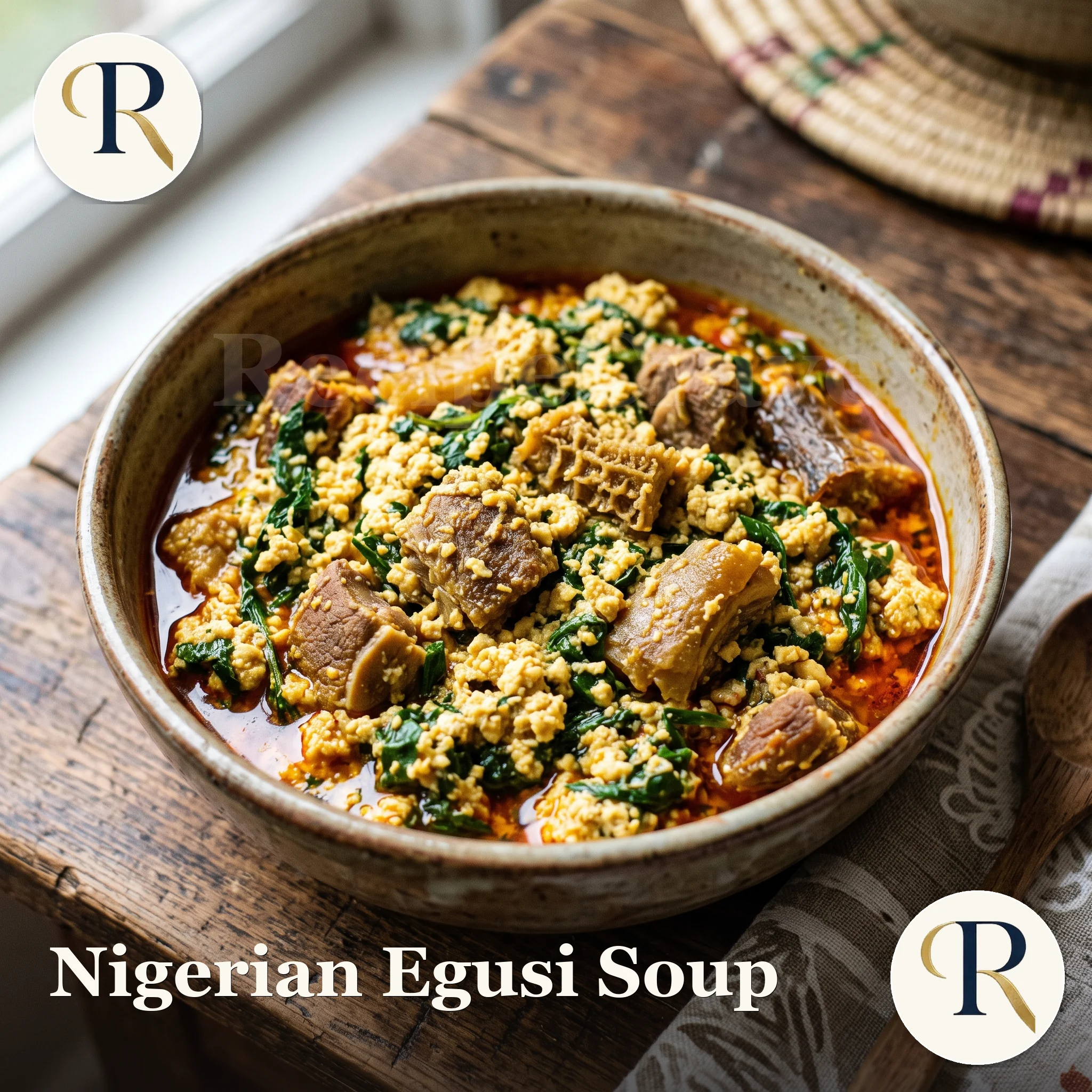
If Nigerian soups had a front door, egusi would be it. It's the most widely eaten soup in the country, made from ground melon seeds, egusi, which cook into a nutty, golden, slightly grainy thickener with real body. The seeds have no relation to the flavour of sweet melon; think closer to a cross between ground almonds and pumpkin seeds.
What goes in the pot
- Ground egusi (melon) seeds, the heart of the dish
- Palm oil, which gives the soup its deep orange colour
- Peppers, onion, and tomato blended into a base
- Assorted meats, beef, goat, shaki (tripe), plus stockfish or dried fish
- Ground crayfish and seasoning cubes for that savoury backbone
- Leafy greens stirred in at the end: bitterleaf, spinach, or ugu (fluted pumpkin leaves)
The signature move is letting the egusi paste fry in the palm oil until it curdles into little clumps, you'll smell the change, a toasted nuttiness that tells you it's ready for stock. Skip that step and the soup tastes raw and pasty. Serve it with pounded yam or eba, and don't skimp on the meat. You can find a full step-by-step in our recipe collection alongside hundreds of other West African dishes.
Afang and Edikang Ikong: The Vegetable Powerhouses
These two soups come from the Efik and Ibibio people of southeastern Nigeria, Calabar and Akwa Ibom, a region with a serious reputation for cooking. They're often confused because both are dense, dark-green vegetable soups loaded with protein. The difference comes down to the leaves.
Afang soup
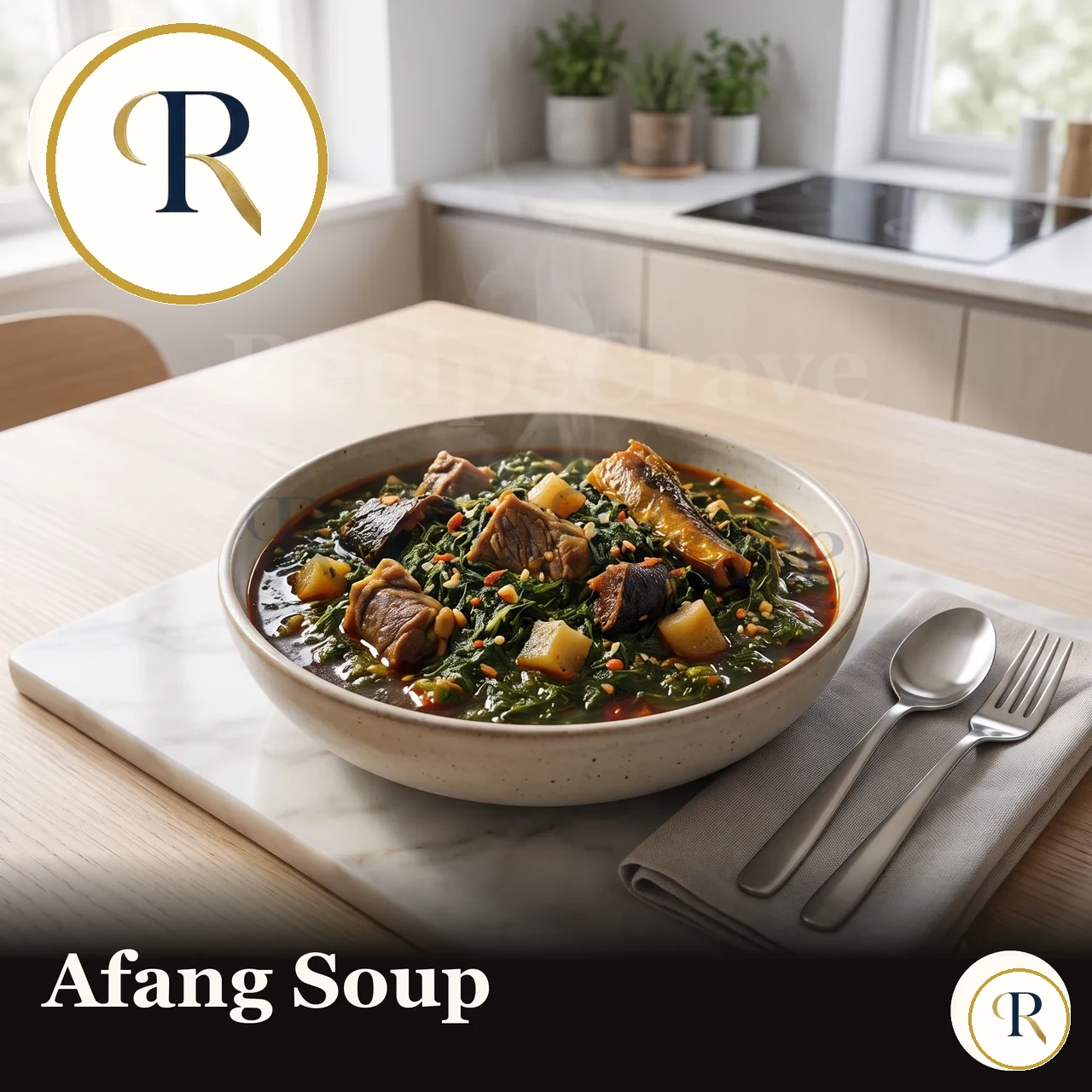
Afang is built on two vegetables: afang leaves (wild okazi vine, tough and aromatic, usually pounded or ground) and waterleaf, which is soft and releases a lot of moisture. The okazi brings a distinctive, slightly bitter chew; the waterleaf melts around it. Add palm oil, crayfish, dried fish, beef, and periwinkles if you can get them, and you have a soup that's barely a liquid at all, more a rich, glistening tangle of greens and meat. It's a celebration dish, the kind served at weddings to signal that nobody cut corners.
Edikang ikong
Edikang ikong swaps the okazi for ugu (fluted pumpkin leaves) alongside the same waterleaf. Ugu is more tender than okazi, so the finished soup is softer and a touch sweeter, but it's every bit as generous: goat meat, beef, dried fish, crayfish, and enough palm oil to make the greens shine. Because both soups are essentially vegetables bound with oil and stock, there's very little added water, the waterleaf does that work. Watery edikang ikong is the classic beginner mistake.
Both soups pair beautifully with fufu or eba. If you're outside Nigeria, frozen ugu and okazi from an African grocer work well; spinach plus a smaller amount of kale can stand in at a pinch, though purists will notice. Browse our cuisine guides to see how these dishes fit into the wider map of West African cooking.
Ogbono Soup: The Draw Soup
Ogbono is where texture becomes the whole story. The soup is thickened with ground ogbono, the seed of the African bush mango, which transforms stock into something silky and elastic. Nigerians call this quality "draw": lift your hand and the soup stretches with it in fine threads, perfect for carrying a ball of swallow from bowl to mouth without drips.
That slippery texture divides people the way okra does (okra soup is its close cousin, and the two are often combined). Give it a fair chance, a well-made ogbono with smoked fish, assorted meat, palm oil, and a handful of bitterleaf is one of the great comfort foods of West Africa.
Beginner notes for ogbono
- Dissolve the ground ogbono in warmed palm oil off the heat before adding stock, it prevents lumps.
- Keep the heat moderate. Aggressive boiling can kill the draw and leave the soup flat.
- Stir with intention, not constantly. The texture builds as it simmers.
- Add vegetables last so they stay green against the deep brown soup.
Serve with eba or pounded yam. Not sure whether you have the right ingredients at home? Run your pantry through our What Can I Cook tool and see which Nigerian soups are already within reach.
Pepper Soup: The Light One
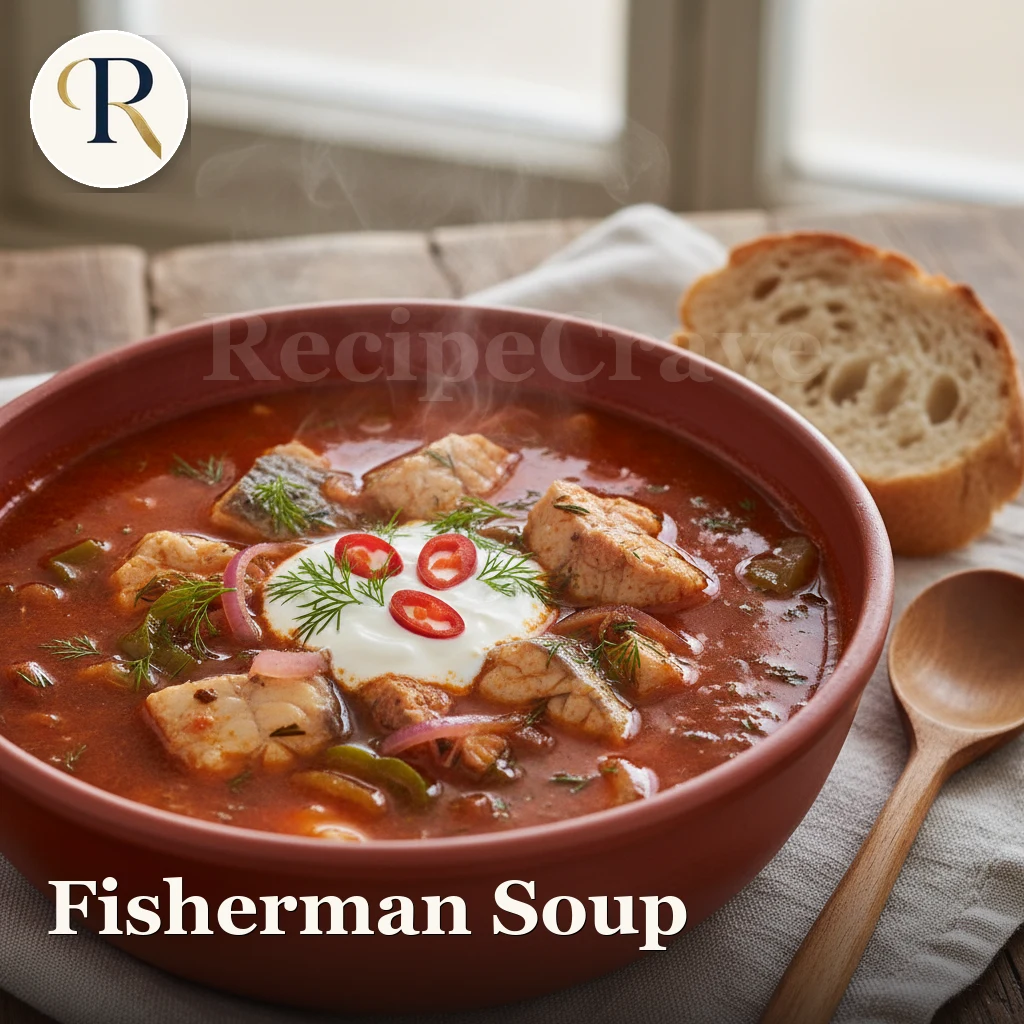
Pepper soup breaks every rule the other four follow. There's no palm oil, no thickener, no leafy greens by the fistful, just a clear, fiercely aromatic broth built on a signature spice blend and whatever protein you choose. Goat meat pepper soup, catfish pepper soup (often called point-and-kill, because you pick your live fish at the restaurant), chicken, assorted meat, each has its loyalists.
The spice mix is what makes it unmistakable: calabash nutmeg (ehuru), grains of selim (uda), and alligator pepper, usually toasted and ground together, plus fresh scotch bonnet for heat. The result is warming in a way that goes beyond chilli, floral, smoky, almost medicinal. It's the soup Nigerians reach for on cold nights, after a long day, or when someone's feeling under the weather, and it's traditionally served to new mothers. Unlike the others, pepper soup isn't eaten with a swallow. It comes as a hot bowl on its own, or with boiled yam, plantain, or white rice on the side.
If you enjoy pepper soup's spice cabinet, it's worth reading up on the individual aromatics, our herbs and spices guide covers many of the ingredients that give West African broths their character.
How to Choose Your First Pot
Here's the honest ranking for a first-timer, easiest to trickiest:
- Pepper soup, one pot, no thickeners, hard to ruin. Your only job is sourcing the spice blend (many African shops sell it pre-mixed).
- Egusi, a few more steps, but forgiving, and the ingredients are easy to find ground and bagged.
- Ogbono, simple ingredient list, but the texture takes a little practice.
- Edikang ikong, easy technique, but it lives or dies on fresh vegetables and generous protein.
- Afang, the okazi leaves need sourcing and pounding, and the water balance is unforgiving. Save it for pot number three or four.
Pro tip: Make your meat stock the day before. Nearly every Nigerian soup starts with well-seasoned boiled meat, and that stock, not water, is what the soup is built on. A rushed, thin stock is the number one reason a beginner's egusi tastes flat while their auntie's tastes like a celebration.
Two more habits that will save you: buy ground crayfish (it's the savoury thread running through almost every soup on this list), and taste your palm oil before you commit, fresh oil smells faintly fruity, while stale oil turns the whole pot musty. If you're scaling a recipe up for a family cook-up, our kitchen calculators take the guesswork out of converting quantities.
Frequently Asked Questions
Are Nigerian soups very spicy?
They're seasoned assertively, but heat levels are up to the cook. Pepper soup is meant to bring real fire; egusi, afang, and ogbono can be made as mild as you like by cutting back the scotch bonnet. Start with less, you can always stir more in.
Can I make these soups without palm oil?
Palm oil is central to the colour and flavour of egusi, afang, edikang ikong, and ogbono, so substitutions change the dish noticeably. Some cooks use a neutral oil with a little paprika for colour, and pepper soup contains no palm oil at all, so it's the natural choice if you're avoiding it.
Where do I buy ingredients like egusi, ogbono, and ugu?
African and Caribbean grocery stores stock ground egusi, ground ogbono, dried crayfish, pepper soup spice, and frozen leafy greens like ugu and okazi. Larger international supermarkets and online African food shops carry most of them too. Frozen greens work well; just squeeze out excess water before they go in the pot.
What's the difference between fufu, eba, and pounded yam?
They're all swallows, starchy accompaniments eaten by hand with soup. Fufu is fermented cassava with a gentle tang, eba is toasted cassava granules (garri) stirred into hot water, and pounded yam is boiled yam pounded smooth and stretchy. Eba is the quickest for beginners; pounded yam is the special-occasion favourite.
About the author. The RecipeCrave editorial team, cooks and writers sharing practical, tested home-cooking guidance.
Keep reading
A Beginner's Guide to Grilling Fish, Chicken, and Steak
Grilling looks intimidating from the outside, but almost all of it comes down to a few habits: build heat zones, oil a hot grate, flip once, and learn doneness by feel and temperature. Here is the beginner version, step by step.
Fermenting at Home for Beginners: Yogurt, Pickles, and More
Fermenting at home is easier than it looks. Here is how simple fermentation works, two beginner projects to start with, the small kit you need, and the safety signs that tell a good batch from a bad one.
Understanding Cooking Oils: Which One to Use and When
Every oil has a job. Some are built for high heat and a crisp crust, others are best kept raw and drizzled at the end. Here is how to match the oil to the pan, store it well and reuse it without the off flavors.